
DiSC Styles of Famous People: Who Is D, i, S and C?
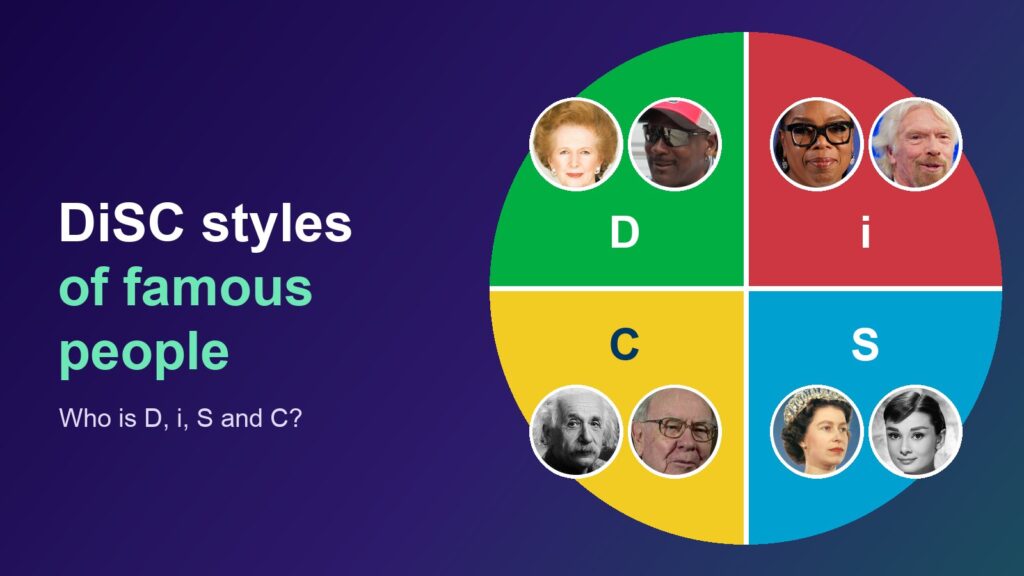
Which DiSC style was Steve Jobs? Is Oprah Winfrey an i style? People love to guess the DiSC styles of famous people, and it is a useful way to make the four styles easy to remember. Below you will find well-known figures whose public behaviour is commonly described as fitting each DiSC style, and what each example teaches us about working with that style.
Important: nobody on this list has taken a DiSC assessment for us, and DiSC is not designed to label people from a distance. These are educated, light-hearted observations of public behaviour, not assessments. Everyone uses all four styles to some degree. The only way to know your own style is to take a validated assessment such as Everything DiSC Workplace, or to start with our free DiSC personality quiz.
Famous people commonly described as D style (Dominance)
The D style is direct, results-driven and quick to decide. Famous D-style examples tend to set bold goals, challenge the status quo and push through resistance.
- Steve Jobs: known for uncompromising standards, fast decisions and a relentless focus on results. A classic example often used in DiSC training.
- Margaret Thatcher: the “Iron Lady” is widely remembered for her firmness, decisiveness and willingness to take on opposition head-on.
- Serena Williams: her competitive drive, confidence and determination to win are often described as typical D-style energy.
- Michael Jordan: famous for his fierce competitiveness, high standards for teammates and hunger to win in the decisive moments.
What this teaches us: people with a D style appreciate it when you get to the point, focus on outcomes and give them choices rather than long explanations.
Famous people commonly described as i style (Influence)
The i style is enthusiastic, sociable and persuasive. Famous i-style examples energise a room and build connection quickly.
- Oprah Winfrey: warm, expressive and a natural connector, she is often cited as a textbook example of the i style.
- Richard Branson: known for his playful publicity stunts, optimism and love of new adventures.
- Robin Williams: his spontaneous humour and infectious energy are frequently used to illustrate the i style.
What this teaches us: people with an i style appreciate enthusiasm, recognition and room to share ideas. Keep things positive and leave time for conversation.
Famous people commonly described as S style (Steadiness)
The S style is patient, supportive and dependable. Famous S-style examples are known for kindness, loyalty and calm.
- Queen Elizabeth II: her 70 years of calm, dutiful and consistent service made her a symbol of stability, a trait often linked to the S style.
- Audrey Hepburn: the Belgian-born actress is remembered for her gentle warmth and her quiet, devoted work as a UNICEF Goodwill Ambassador.
- Keanu Reeves: widely described as humble, kind and loyal to the people he works with.
What this teaches us: people with an S style appreciate a calm pace, sincere appreciation and time to adjust to change.
Famous people commonly described as C style (Conscientiousness)
The C style is analytical, precise and quality-focused. Famous C-style examples are driven by accuracy, logic and expertise.
- Albert Einstein: deep, independent thinking and a lifelong pursuit of precise explanations.
- Marie Curie: her meticulous, persistent research earned her two Nobel Prizes.
- Bill Gates: known for his analytical mind, love of data and detailed approach to problems.
- Warren Buffett: the investor is known for patient, disciplined analysis, careful research and decisions grounded in data rather than hype.
What this teaches us: people with a C style appreciate facts, clear logic and time to think before they decide.
Why you cannot really “type” a celebrity
Public figures play a role. What we see on stage, on screen or in the news is a small and often curated slice of their behaviour. DiSC also describes 12 blended styles, such as Di or SC, rather than four boxes (see the 12 Everything DiSC styles explained). Use these examples to remember the four styles, not to label real people, including your colleagues.
Find out your own DiSC style
Curious which style is closest to yours? Take the free DiSC personality quiz for a quick first impression, or get a full, validated Everything DiSC Workplace profile for a 20+ page personalised report.
Frequently asked questions
What DiSC style was Steve Jobs?
Based on his public behaviour, Steve Jobs is commonly described as a D style: direct, demanding and focused on results. He never took a DiSC assessment publicly, so this is an observation, not an assessment.
Which DiSC style is most common?
All four styles are well represented in the population, and most people show a blend of two styles. No style is better than another.
Can you identify someone’s DiSC style without an assessment?
You can make an educated guess from observable behaviour, which is useful in conversations and sales (see how to identify DiSC styles in person). For an accurate result, a validated assessment is needed.
Header image photos via Wikimedia Commons: Margaret Thatcher (copyrighted free use), Michael Jordan by Zach Catanzareti (CC BY 2.0), Oprah Winfrey, Richard Branson, Queen Elizabeth II, Audrey Hepburn, Albert Einstein and Warren Buffett (public domain). Photos cropped.
Enjoyed this? Get more like it.
One short email whenever we publish something new about DiSC, teams and workplace behaviour. No spam.