
The Five Dysfunctions of a Team — summary
Patrick Lencioni’s bestselling book explains why teams struggle in five predictable ways — and how each one is fixed. Here is a clear summary of the pyramid, plus how it connects to The Five Behaviors® team assessment.
On this page
What the book is about The five dysfunctions From the book to the workplace Key takeaways FAQThe basics
What the book is about
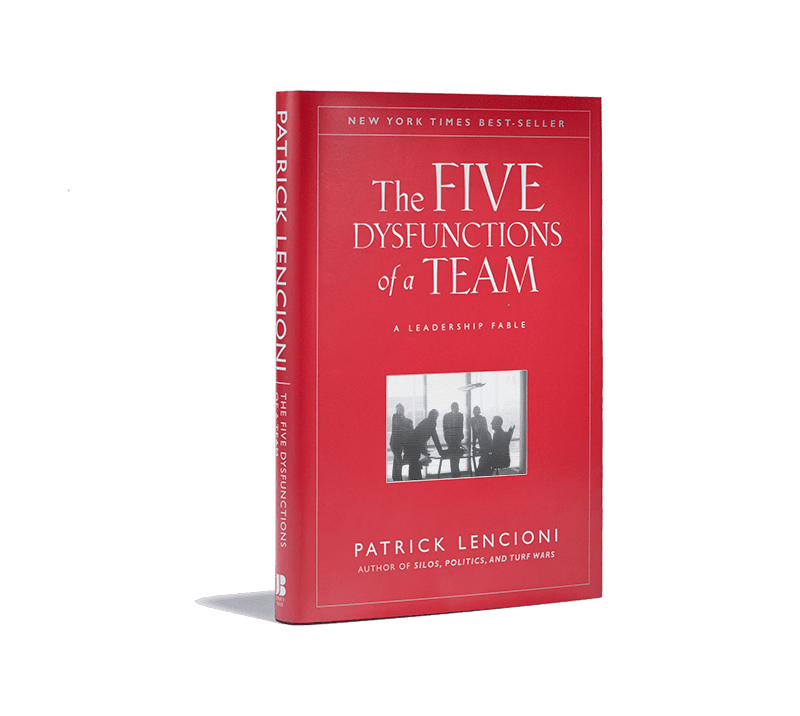
The Five Dysfunctions of a Team (2002) is a leadership fable by Patrick Lencioni. Through the story of a fictional executive team, it argues that teamwork fails not because of strategy or talent, but because of five interconnected behavioural problems that build on each other.
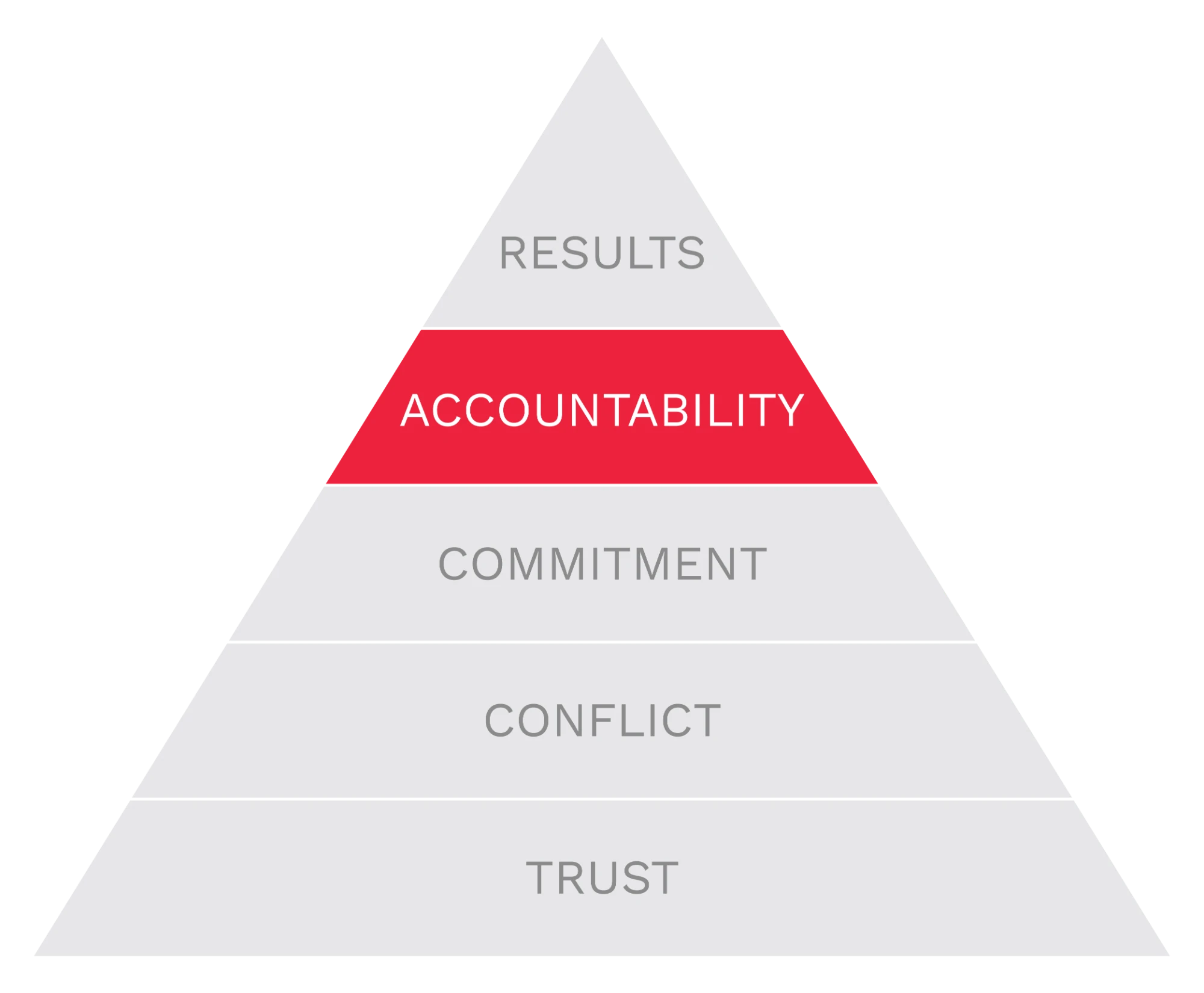
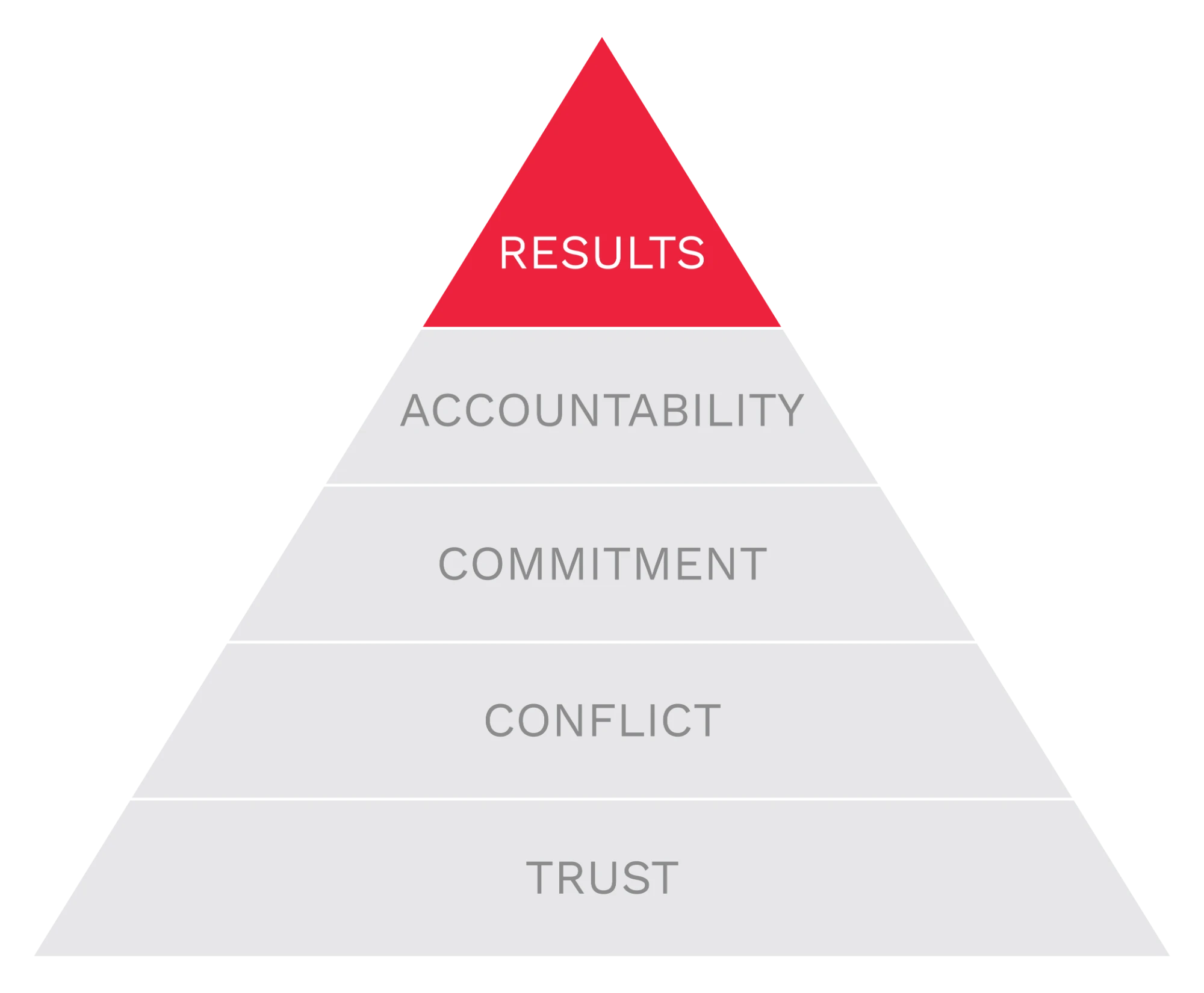
Lencioni presents them as a pyramid. Each dysfunction sits on the one below it, so you cannot fix a higher level while a lower one is broken. The model is deliberately simple and memorable, which is a large part of why it has stayed popular with managers for more than twenty years.
The model
The five dysfunctions model
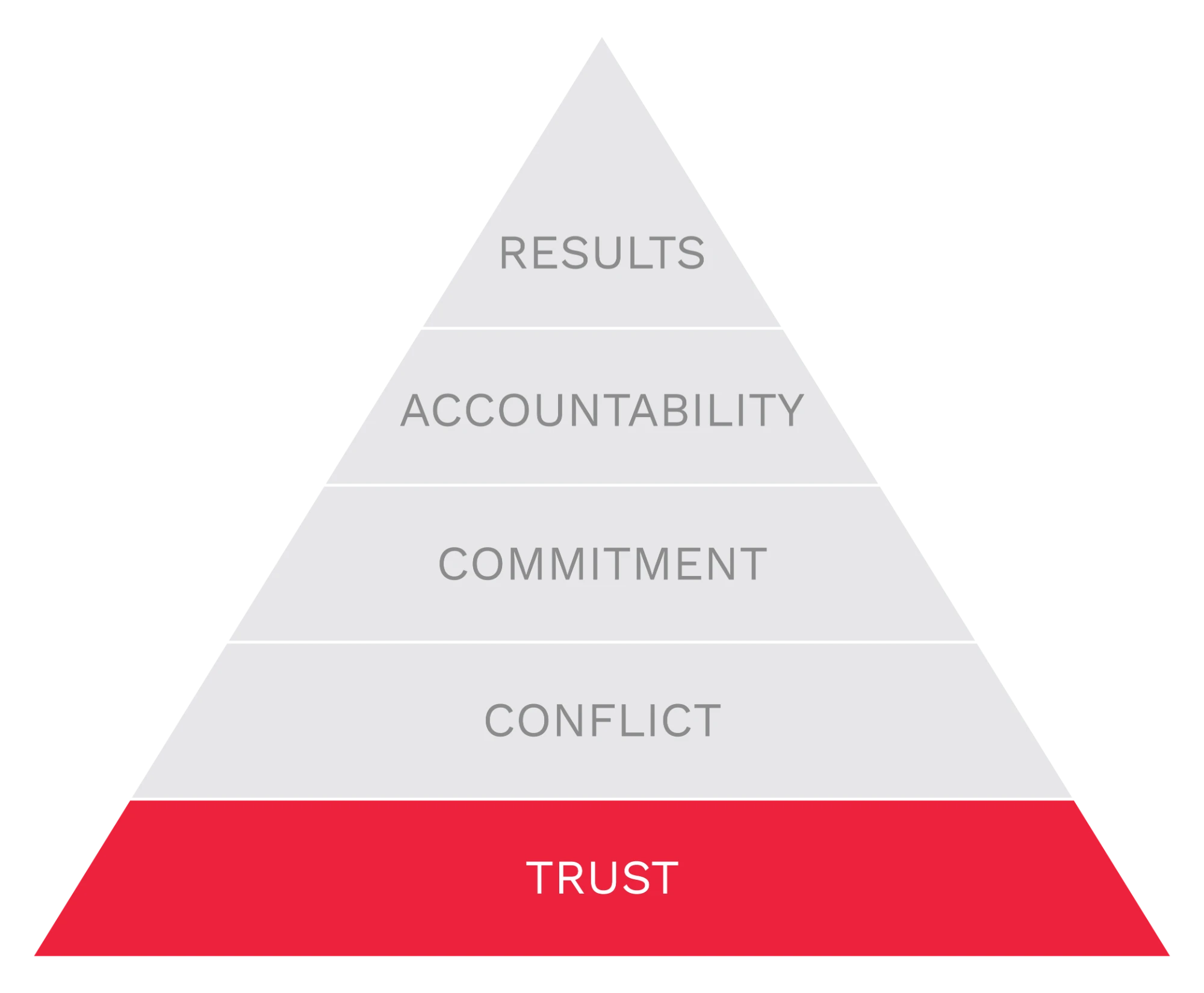
Absence of trust
Team members are unwilling to be vulnerable with each other — to admit mistakes, ask for help or say “I was wrong.” Without that, people guard their reputations instead of focusing on the work.
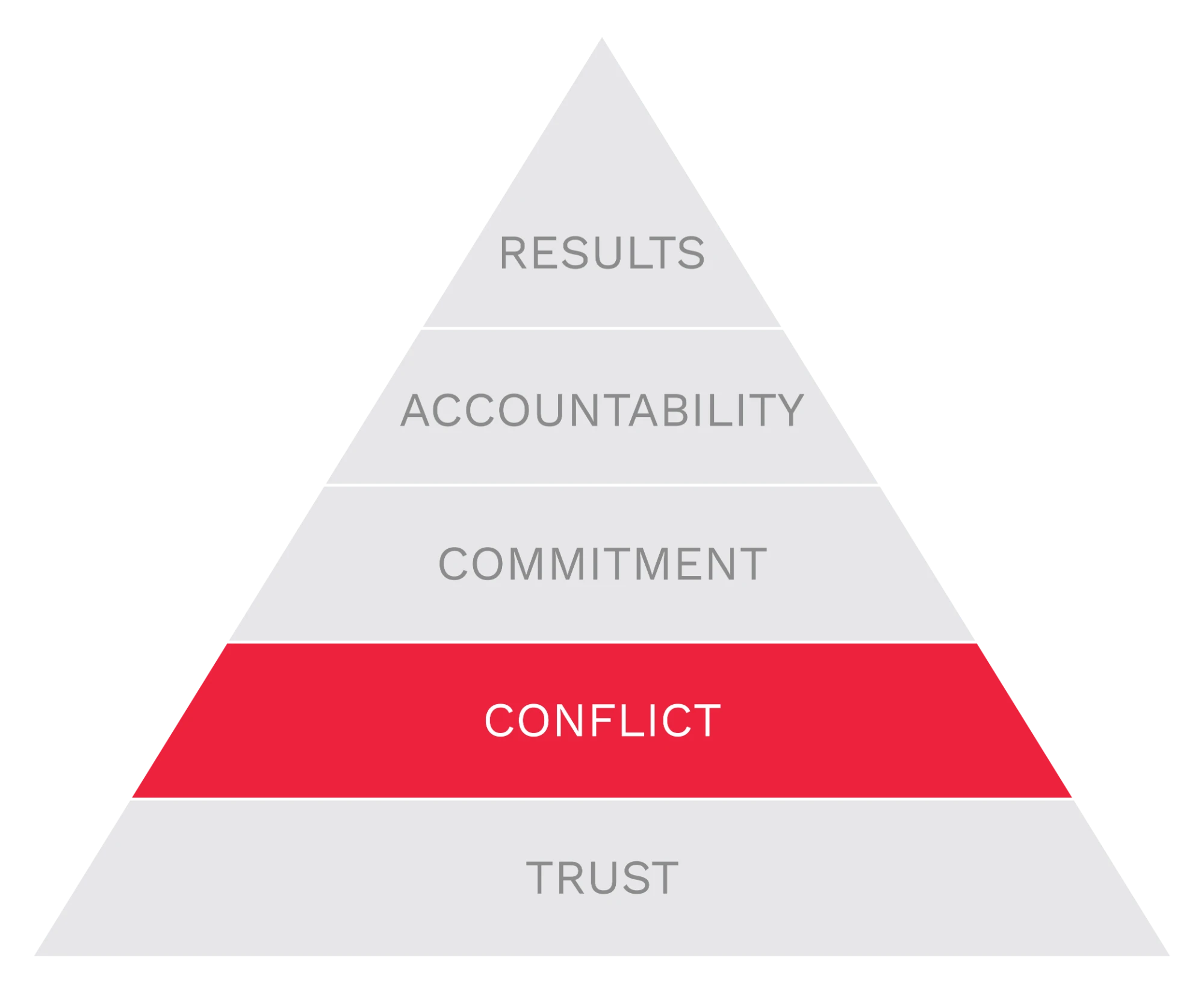
Fear of conflict
Teams that lack trust cannot have honest, unfiltered debate about ideas. They settle for artificial harmony — polite meetings, and the real disagreements happening in the corridor afterwards.
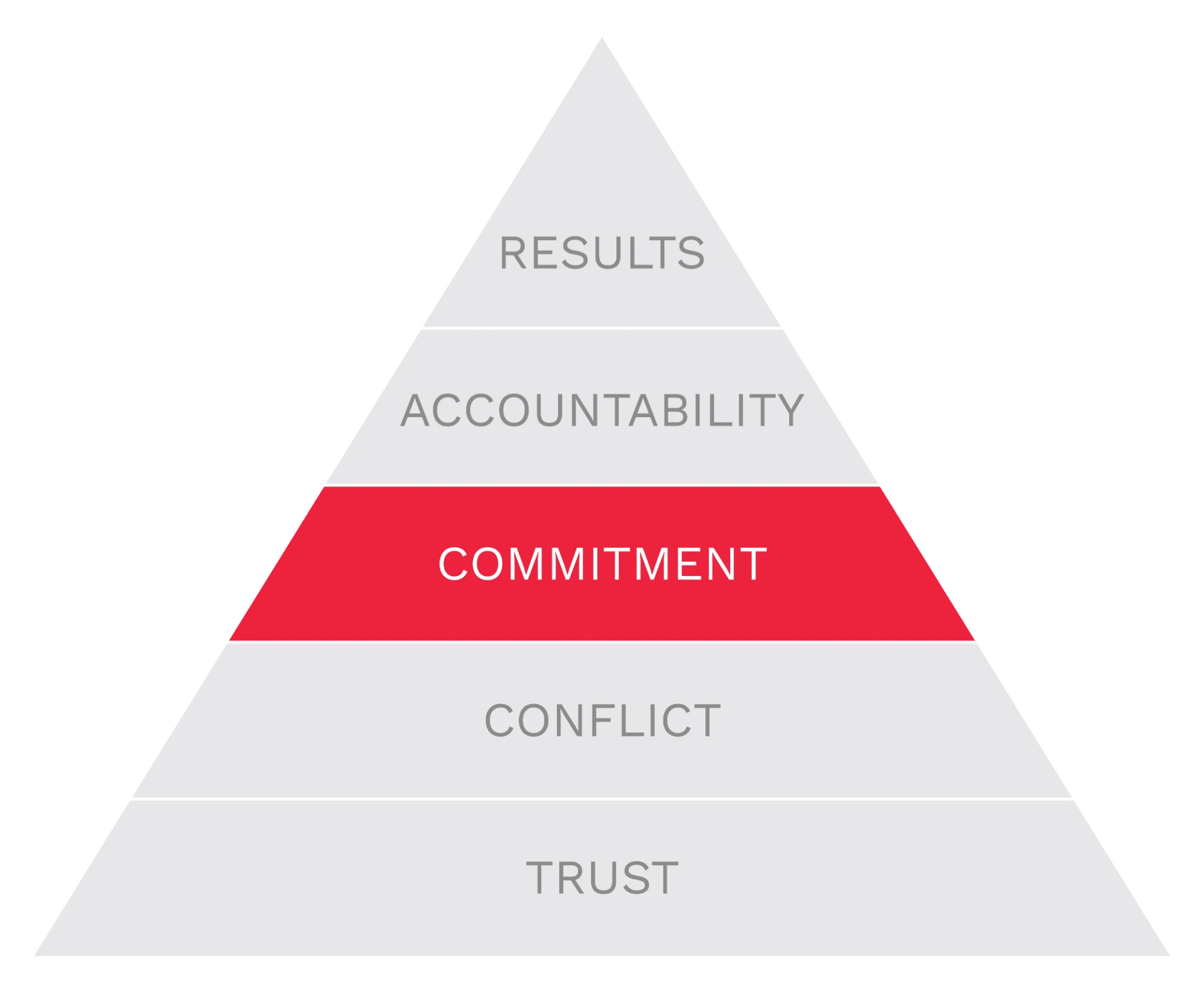
Lack of commitment
When people have not aired their views in open debate, they rarely buy in to a decision. Ambiguity takes over: no one is clear on what was agreed or by when.
Avoidance of accountability
Without commitment to a clear plan, team members hesitate to call out peers whose behaviour or performance hurts the team. Standards slip because no one holds the line.
Inattention to results
At the top of the pyramid, individuals put their own status, ego or department ahead of the collective goal. The team stops winning because it is no longer trying to.

“Not finance. Not strategy. Not technology. It is teamwork that remains the ultimate competitive advantage, both because it is so powerful and so rare.”Patrick Lencioni, author of The Five Dysfunctions of a Team
From book to practice
From the book to the workplace: The Five Behaviors®
Lencioni’s model was turned into a team development programme — The Five Behaviors®, published by Wiley — which flips each dysfunction into a behaviour a team can build and measure.
| Dysfunction (the problem) | Behaviour (the goal) |
|---|---|
| Absence of trust | Trust |
| Fear of conflict | Conflict |
| Lack of commitment | Commitment |
| Avoidance of accountability | Accountability |
| Inattention to results | Results |
The Five Behaviors® assessment gives a team a shared, measurable read on where it stands on each level, plus a facilitated session to work through them. It also uses each person’s DiSC® style to make the feedback more personal. See The Five Behaviors® and the certification.
Book vs. assessment
The book is a concept and a story. The Five Behaviors® is the licensed tool that measures a real team against the model and guides the conversation. Reading the book is a good start; the assessment is how a team actually acts on it.
Summary
Key takeaways
• The five dysfunctions build on each other — you cannot fix conflict without trust, or results without accountability.
• Trust here means vulnerability-based trust, not “predicting each other’s behaviour.”
• Healthy conflict is about ideas, and it is a requirement for real commitment.
• Accountability works best peer-to-peer, not only top-down.
• The point of the whole pyramid is collective results.
FAQ
Questions about the Five Dysfunctions model
What is the main point of The Five Dysfunctions of a Team?
That teamwork fails in five predictable, connected ways — absence of trust, fear of conflict, lack of commitment, avoidance of accountability and inattention to results — and that each one has to be addressed in order, from the base of the pyramid up.
In what order should you read the pyramid?
From the bottom up. Trust is the foundation; results sit at the top. Each level depends on the one beneath it, so fixing a higher dysfunction is only possible once the lower ones are handled.
Is the model based on research?
It is a practitioner model drawn from Lencioni’s consulting work, presented as a business fable rather than an academic study. The related Five Behaviors® assessment from Wiley adds a validated measurement layer on top of the concept.
What is the difference between the book and The Five Behaviors® assessment?
The book explains the model through a story. The Five Behaviors® is a licensed assessment and facilitated programme that measures a specific team against the model, personalised with each member’s DiSC® style.
How does DiSC® relate to the Five Behaviors model?
They are separate models that work well together. DiSC® describes individual work styles; the Five Behaviors describes how a team functions. The Five Behaviors® assessment uses DiSC results to tailor its feedback to each person.
Source
Patrick Lencioni, The Five Dysfunctions of a Team: A Leadership Fable (Jossey-Bass, 2002). For a general overview of the book see the Wikipedia entry. The Five Behaviors® is a registered trademark of John Wiley & Sons, Inc.
Want to run the model with a real team?
The Five Behaviors® assessment turns the pyramid into a measurable, facilitated session — personalised with each person’s DiSC® style.
See The Five Behaviors® →