
William Moulton Marston: the psychologist behind DISC
The DISC model traces back to a 1928 book by American psychologist William Moulton Marston — the same man who built an early lie detector and created Wonder Woman. He devised the theory; the assessment came decades later.
Biography
Who was William Moulton Marston?
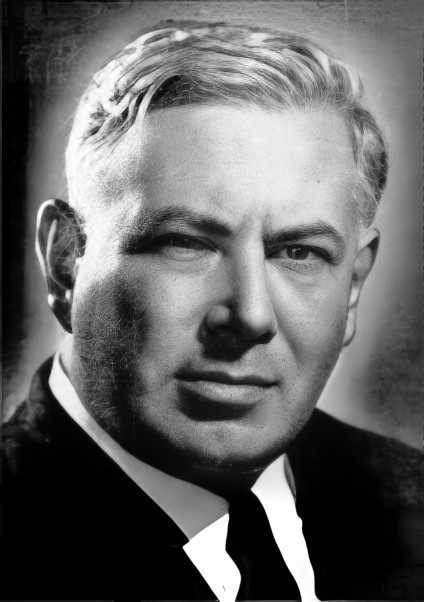
William Moulton Marston (1893–1947) was an American psychologist, lawyer and writer. He earned his PhD in psychology from Harvard in 1921 and spent his career studying human emotion and behaviour.
He is remembered for three very different things. In psychology, his research on blood pressure and deception fed into the development of the modern polygraph (lie detector). In popular culture, writing as “Charles Moulton,” he created the comic-book character Wonder Woman in 1941. And in the world of workplace assessment, his 1928 book Emotions of Normal People introduced the behavioural theory that became known as DISC.
The theory
Marston’s DISC theory
In Emotions of Normal People, Marston proposed that people’s behaviour could be understood along two axes: whether they see the environment as favourable or antagonistic, and whether they respond to it actively or passively. Crossing those gives four behavioural tendencies.
Marston’s original four terms were Dominance, Inducement, Submission and Compliance. Over the following decades these were re-labelled — today’s common wording is Dominance, Influence, Steadiness and Conscientiousness — but the underlying four-quadrant idea is Marston’s.
Importantly, Marston never built a test. He described a way of thinking about normal, everyday behaviour, not a measurement instrument.
Then and now
Marston vs. modern DiSC
The step from theory to assessment was taken by others. In the 1950s, industrial psychologist Walter Clarke built the first practical DISC questionnaire from Marston’s ideas. John Geier developed it further into the widely used Personal Profile System in the 1970s.
The version most organisations use today is Everything DiSC®, published by Wiley — an adaptive, research-validated assessment that is regularly re-normed. It is built on Marston’s four-quadrant foundation but is a modern instrument, not Marston’s 1928 model itself. For the full picture see the complete guide to the DiSC model.
Timeline
From Marston to Everything DiSC®
FAQ
Questions about William Moulton Marston and DISC
Did Marston create the DISC test?
No. Marston created the behavioural theory in his 1928 book Emotions of Normal People. The first DISC assessment was built by Walter Clarke in the 1950s, and the modern validated version is Wiley’s Everything DiSC®.
What does DISC stand for in Marston’s model?
Marston’s original four terms were Dominance, Inducement, Submission and Compliance. Modern usage is Dominance, Influence, Steadiness and Conscientiousness.
Is today’s DiSC the same as Marston’s theory?
It is based on the same four-quadrant idea, but it is not identical. Everything DiSC® is a modern, adaptive, research-validated instrument that has been refined and re-normed over decades.
What else is William Moulton Marston known for?
His research contributed to the development of the polygraph lie detector, and he created the comic-book superhero Wonder Woman in 1941 under the pen name Charles Moulton.
When did Marston publish the DISC theory?
In 1928, in the book Emotions of Normal People.
Sources & further reading
William Moulton Marston, Emotions of Normal People (Kegan Paul, 1928). For biographical detail see the Wikipedia entry on William Moulton Marston and the entry on the DISC assessment. Everything DiSC® is a registered trademark of John Wiley & Sons, Inc.
See how the model works today
Marston gave us the four quadrants. Everything DiSC® turns them into a validated profile you can use with a team.
What is DiSC? →